

Severity
High
Analysis Summary
MysteriousElephant, also known as APT-K-47, is a South Asia–linked advanced persistent threat group that was first publicly documented by Kaspersky in 2023, although its activity has been observed since at least early 2022. As of 2026, the group continues to operate with a strong alignment to regional geopolitical interests, primarily conducting espionage against government and diplomatic entities in Pakistan, while occasionally extending operations to Bangladesh and Turkey.
Security researchers have identified tactical and tooling overlaps with other suspected Indian-aligned threat clusters such as SideWinder and Confucius; however, attribution remains assessed with low confidence. The group leverages a combination of custom malware families, including ORPCBackdoor, which communicates over RPC using the ncacn_ip_tcp protocol, alongside techniques such as DLL hijacking (notably via version.dll) and persistence through scheduled tasks. Its capabilities include system reconnaissance, remote command execution, and data exfiltration. Another key tool, Asyncshell, is a lightweight command-line C2 implant that has undergone continuous development and refinement through 2026.
Initial access is typically achieved via spear-phishing campaigns, often involving password-protected ZIP archives containing malicious RTF or CHM files. The group has also been observed exploiting vulnerabilities such as CVE-2023-38831 in WinRAR to facilitate payload execution. Their social engineering tactics are highly targeted, frequently using decoy documents themed around government affairs, defense, or religious contexts, sometimes even hosted on legitimate Pakistani infrastructure to enhance credibility.
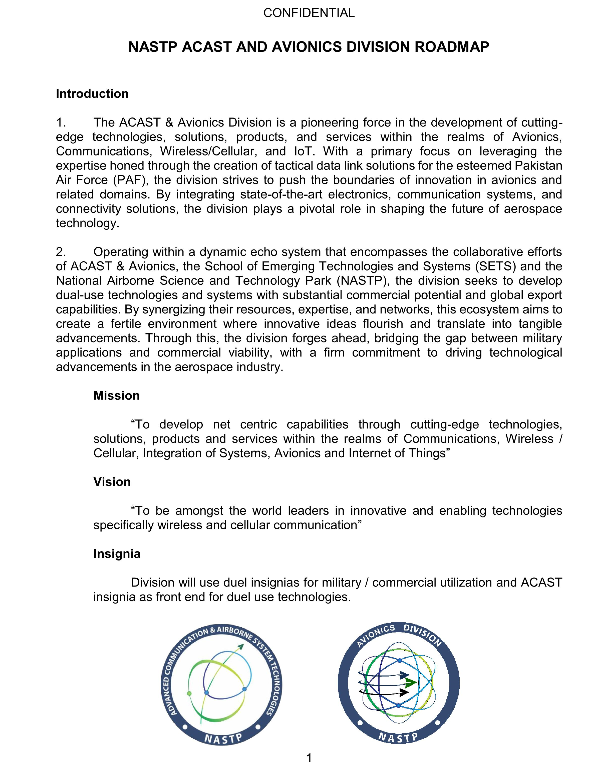
In a more recent 2025–2026 campaign, MysteriousElephant specifically targeted Pakistan’s National Aerospace Science and Technology Park (NASTP). The operation involved delivering malicious payloads disguised as CHM and executable files named “NASTP_ACAST_AND_AVIONICS_DIVISION_ROADMAP_Final_Ver_2,” indicating a high level of targeting toward aerospace and defense-related entities. These lures were designed to appear as legitimate internal documents, increasing the likelihood of successful execution within sensitive environments.
Overall, the impact of MysteriousElephant’s operations remains centered on long-term espionage objectives, enabling persistent access to compromised networks, exfiltration of sensitive data, and intelligence gathering aligned with broader strategic interests.
Impact
- Cyber Espionage
- Data Exfiltration
- Unauthorized Access
Indicators of Compromise
IP
- 188.214.33.170
MD5
96b15bb9ce8ef7c41b708b1620029d99
91693c2d5a4b7d090fe06cc7382dfc18
SHA-256
7ea0930a332788c2e88e5822e4908d77cdcaad57e0e97401ed8fe4b117fdfc95
9fb6f4c55e5198739123264f8007cf6e22b3821af97a00a471bd54b30991ecd0
SHA1
6fe2e74d009abbd56de01fd7404a1245e9b47c79
47f8cb0c2dcf62702f58cfc1603d6325755f6820
Remediation
- Apply latest security patches to WinRAR and other frequently exploited software to close known vulnerabilities like CVE-2023-38831.
- Block execution of CHM and other risky file formats at the email gateway to reduce malicious document delivery.
- Enable attachment sandboxing and content disarm/reconstruction (CDR) to detect or neutralize malicious payloads before reaching end users.
- Implement endpoint detection and response (EDR) rules to spot DLL hijacking attempts and abnormal scheduled task creation.
- Monitor for unusual RPC traffic patterns to detect ORPCBackdoor and similar C2 channels.
- Train users to recognize phishing attempts, including password-protected ZIPs and themed lures.
- Enforce strict email filtering with multi-factor authentication for user accounts to prevent credential theft.
- Conduct proactive threat hunting for Asyncshell and other known tool artifacts in logs and memory.
- Limit user privileges and enforce application whitelisting to prevent arbitrary malware execution.
- Establish incident response playbooks for APT-style intrusions to ensure quick containment and recovery.