

Severity
High
Analysis Summary
Phobos Ransomware is based on the Dharma (aka CrySIS) malware that first appeared at the beginning of 2019. It spreads into several systems via compromised Remote Desktop Protocol (RDP) connections. This malware does not use any UAC bypass methods. Unlike other cybercrime gangs that go after big hunts, Phobos creators go after smaller firms that don’t have sufficient funding to pay massive ransoms. This ransomware usually targets healthcare providers, with victims in the United States, Seychelles, Portugal, Brazil, Indonesia, Germany, Romania, and Japan. Its perpetrators demand a little ransom payment, which appeals to victims and enhances the chances of payment. The average Phobos ransom payment in July 2022 was $36,932
Phobos encrypts data & files and keeps them locked until a ransom is paid. All encrypted files are renamed with the “.phobos” extension, as well as the victim’s unique ID and email address.
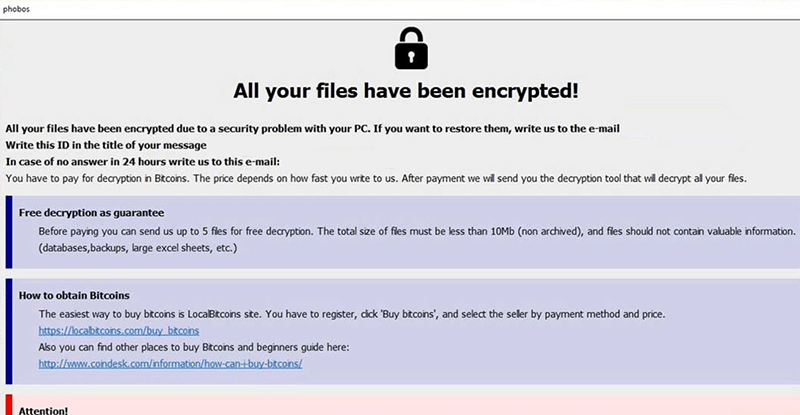
ransom note
Impact
- File Encryption
- Data Exfiltration
Indicators of Compromise
MD5
- ce35af5edb5d81a7db601afa189e0e37
- 41f83dd3ea026832e1260d60bb545d25
- de3118d4369fddeedf5272011350476c
SHA-256
- 8642770995c3663ff3b46a3f8c946d38d475c0a2373c281aca3fae221c430ed5
- 3d74af3883a13e67984fdb593aace7fa0371cd8a2cc1de05b18292c8e88973bb
- d8acb51e4c3c0fe91ff0ffff41e6b6c311affcea223b05b24383aa07d6923334
SHA-1
- d383e987ffdb83892a66ca94c0bbb851ee1260bc
- c4cbe03a463124276f6e076751c317274d933ea1
- f04db253158efe0aa9427e61b7b62ae4a4373660
Remediation
- Block all threat indicators at your respective controls.
- Search for IOCs in your environment.
- Maintain cyber hygiene by updating your anti-virus software and implementing patch management lifecycle.
- Maintain Offline Backups – In a ransomware attack, the adversary will often delete or encrypt backups if they have access to them. That’s why it’s important to keep offline (preferably off-site), encrypted backups of data and test them regularly.