


Severity
High
Analysis Summary
Two newly disclosed zero-day vulnerabilities targeting Microsoft Windows have raised serious security concerns across enterprise and government environments. The flaws, named Microsoft BitLocker YellowKey and GreenPlasma, were publicly released by a security researcher following an apparent dispute over Microsoft’s handling of prior vulnerability disclosures. The release includes exploit code capable of bypassing core security protections, leaving affected systems exposed without an official patch. The researcher further made controversial allegations regarding intentional backdoors within Microsoft systems, though no independent evidence currently supports these claims.
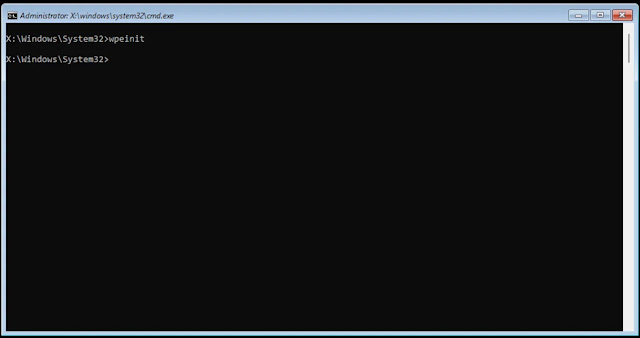
The more severe vulnerability, YellowKey, is a full-disk encryption bypass affecting Windows 11, Windows Server 2022, and Windows Server 2025. It exploits weaknesses within the Windows Recovery Environment, allowing attackers with physical access to bypass BitLocker protections within minutes. The attack can be executed by copying a specially crafted FsTx folder onto a USB drive or directly inserting exploit files into the system’s EFI partition. Once the target is rebooted into recovery mode using specific key combinations, the exploit leverages WinRE components to spawn a privileged shell, granting unrestricted access to encrypted system volumes. Notably, Windows 10 remains unaffected due to architectural differences in its recovery environment.
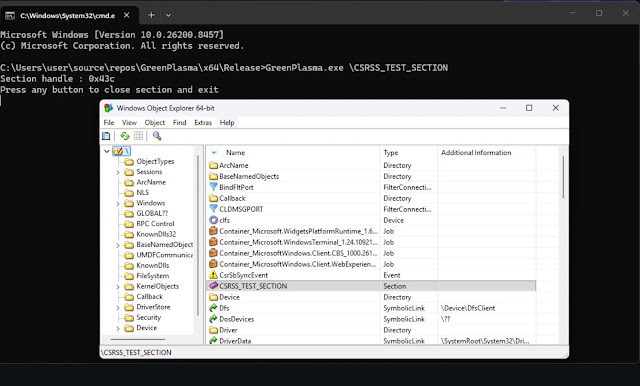
The second vulnerability, GreenPlasma, is a local privilege escalation flaw targeting the CTFMON service. It enables attackers with limited system access to create arbitrary memory-section objects within directory structures normally reserved for the SYSTEM account. This manipulation can trick trusted Windows services and kernel-mode drivers into executing unauthorized code, potentially resulting in full SYSTEM-level compromise. Although the publicly released proof-of-concept still triggers a User Account Control alert and requires further refinement for silent exploitation, it presents a serious post-compromise escalation path that could enable persistence and deep operating system control if chained with other attack vectors.
As Microsoft has yet to release official patches, organizations must rely on immediate defensive measures. Security researchers recommend enforcing strong BitLocker PIN authentication, setting robust BIOS/UEFI passwords, restricting physical access to endpoints, and closely monitoring for unauthorized modifications to WinRE and EFI partitions. Security teams should also increase monitoring for suspicious memory-section creation activity linked to CTFMON abuse. While current public exploit code does not fully bypass TPM+PIN protections, the disclosure significantly increases risk exposure, making proactive hardening and endpoint access control critical until Microsoft issues remediation guidance.
Impact
- Privilege Escalation
- Gain Access
Remediation
- Enable BitLocker with a strong pre-boot PIN instead of relying solely on TPM-based protection.
- Configure a strong BIOS/UEFI password to prevent unauthorized boot configuration changes.
- Restrict physical access to all corporate endpoints, servers, and sensitive systems.
- Disable or limit access to the Windows Recovery Environment (WinRE) where operationally possible.
- Regularly monitor and audit the EFI partition for unauthorized file modifications or suspicious folders such as FsTx.
- Implement Secure Boot and ensure it is enforced across all affected devices.
- Monitor for unusual activity involving CTFMON service and abnormal memory-section creation attempts.
- Apply strict least-privilege access controls to reduce local privilege escalation opportunities.
- Deploy Endpoint Detection and Response (EDR) solutions to detect privilege escalation or recovery environment abuse.
- Enable logging and alerting for boot process modifications and system recovery changes.
- Keep systems updated and immediately apply Microsoft security patches once official fixes are released.