

Severity
High
Analysis Summary
The STOP/DJVU ransomware initially made headlines in 2018 and has since been attacking individuals all around the world. It’s widespread on torrent sites and other platforms in software crack packages and adware bundles.DJVU Ransomware is a type of malicious software that encrypts the files on an infected computer and demands a ransom payment in exchange for the decryption key. The STOP/DJVU Ransomware family is one of the most prevalent ransomware threats and is known for its aggressive tactics and high-pressure ransom demands.
Malware is delivered via cracked applications, fake set-up apps keygens, activators, and Windows updates. It does not utilize local information like keyboard layouts or timezone settings to prevent infecting victims in certain countries; instead, it uses the information returned by a request to https[:]//api.2ip.ua/geo.json. The card’s MAC address is utilized to provide unique identification for the system. This identity is provided to STOP’s command and control server, which responded with an RSA-2048 public key for encryption. Additional malware, including an information stealer known as Vidar, is then downloaded and installed.
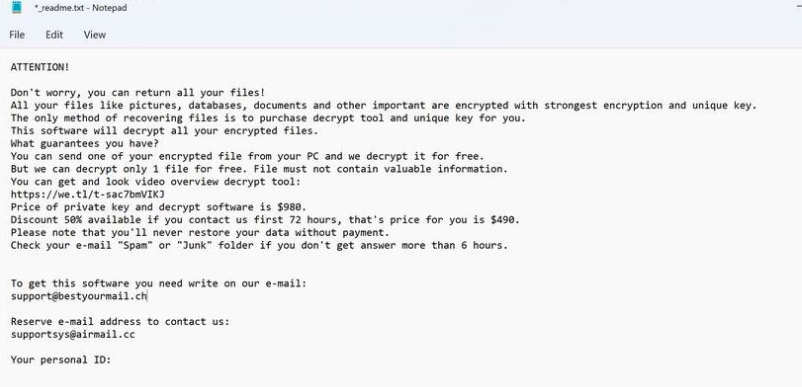
ransom note
Impact
- Information Theft
- File Encryption
Indicators of Compromise
MD5
- 83af4ef0e9a8439d9886543c64fa856d
- db14d145295e8383cbc437402767c355
- 96cf6e0b838ee7ecfd36be7d34aa5a83
- 512fe8e475da3725a0da684d1baea381
- 9f2ec0841038ab71e92b9cca25130539
- d65e8623c52eadbd5d75a1f515d49500
- 9f8de64b1ae31558a70d0915c545064b
- 012cb286ce81b404dc70c71a82269f9d
- f87d7f832564c394452812cea1e4329a
- 13e3a0ef1cb2de40b1c4473a2dd07679
- b80fb8f1c0bb9b4e8d08ab130ab9071e
SHA-256
- 57f9d6d47e986ee6b86c6a998abd930d7ca8bf665327bafbbe9b812c7beabc6f
- 42b18e2898edc79c7a53a8ef897bd90eb55b87f30fc26efb3e5ae060d3d16dba
- e4c214092fb97a2bb15e10685472a4d45cd1f1dce58f3330ade709a32afb5c47
- 3e2a13cc4b4b32d4605f9f8ddfdc344612765a7a01315acd22ec337e31588e5c
- 5eee80fea78fe79bb050b2bedabc4a9bda725f4165901b23fbbff70973cc3fd8
- e100d6bf0ffaebe21a08504e2589a75467f0bc347c000ffd59abcb14ec09de92
- e9c467bbc89816251d073e9183ee48e4ed114ff0754ccaf5a4107098cab85704
- 8c31454ac98665c9e9db5b38e9e31ef50e850bf9ac16aeb1fc227ae7c080c9f3
- 7cd8f4d6ca942964b399f5a910f99d022ef0298e5b15f9d1a1daaa5fdb261697
- 34f07b086f0e12d8b13d66c97f79ff8fa47a9dc106f0f77b2256dcb72d47bc95
- 76a4371031b41468ffa00f983d52207391e0a2d80861f170fcf69645ae3fd903
SHA-1
- f2258f79081cb4d2383eae195c8603c0cc889f34
- 53f83db1fc44f62bdfcc4eb4f41aec716ffae554
- 8a6402d9779089906712f470aac462b3d2fd4a3a
- 3a9bc73a1b9ab1e5ffb617a3aca82a26812eb178
- 02e3dc0bd19823321bdc9ab0b5686f55b457ae93
- 750dc8abea1f81ba18baa69d714a5df070dd6d00
- 17f748ecd0c5badc7a8da0025ce1d6b394ce60db
- 50433747e0eab4fcd9c9ae59b2b60b4174ab2a62
- b3d889c87a05799fc1f40b70799a15470712d589
- c27be7a6c9183de9a308a70ac44d6092053b1d66
- 4b1a28730a1a2224a37ab641f80b1b53ac1f4240
Remediation
- Block all threat indicators at your respective controls.
- Search for Indicators of compromise (IOCs) in your environment utilizing your respective security controls
- Maintain cyber hygiene by updating your anti-virus software and implementing a patch management lifecycle.
- Maintain Offline Backups – In a ransomware attack, the adversary will often delete or encrypt backups if they have access to them. That’s why it’s important to keep offline (preferably off-site), encrypted backups of data and test them regularly.
- Emails from unknown senders should always be treated with caution.
- Never trust or open links and attachments received from unknown sources/senders.